
Can Pelvic Floor Physiotherapy Help With Painful Sex? Yes. Here's How.
Sex hurts. Maybe it's always hurt. Maybe it started after having a baby, or after surgery, or around menopause. Maybe penetration is impossible. Maybe it's just uncomfortable enough that you avoid it. Maybe you can't use tampons or menstrual cups without pain.
You've probably heard a lot of unhelpful advice: "just relax," "have more foreplay," "try some wine." Maybe a healthcare provider told you everything looks fine and suggested it might be psychological. Maybe you've stopped believing it could ever be different.
Here's what you need to know: painful sex is common, but it's not normal, and it's not something you have to accept. Pelvic floor physiotherapy can effectively treat painful sex by addressing the underlying muscle dysfunction causing conditions like vaginismus, dyspareunia, vulvodynia, and vestibulodynia. At our Coquitlam clinic, we provide specialized pelvic floor physiotherapy for sexual pain throughout the Tri-Cities area.
This isn't about forcing your body to do something it's resisting. It's about understanding why your pelvic floor muscles are responding the way they are, and addressing the muscle tension that's causing the pain.
What Causes Painful Sex? Vaginismus, Dyspareunia, and Vulvodynia Explained
Let's start with some definitions so we're clear about what we're talking about.
Dyspareunia is the medical term for painful intercourse. It's an umbrella term that covers any pain before, during, or after penetrative sex.
Vaginismus is when your pelvic floor muscles involuntarily tighten, making penetration difficult, painful, or impossible. This isn't something you're doing on purpose - it's an involuntary muscle response, similar to how your eye reflexively closes if something comes toward it.
Vulvodynia is chronic pain in the vulva (the external genital area) without a clear identifiable cause. The pain might be constant or happen with touch.
Vestibulodynia is pain specifically at the vaginal opening (the vestibule). This often shows up as sharp, burning pain with attempted penetration.
Deep dyspareunia means pain deep in the pelvis during penetration - this can indicate issues with pelvic floor tension, scar tissue, or conditions like endometriosis.
People with penises can also experience pelvic pain that affects sexual function - painful erections, pain during or after ejaculation, or chronic pelvic pain that makes intimacy uncomfortable.
When might you experience pain:
During attempted penetration
During intercourse
After intercourse (sometimes hours later)
With arousal
Even with non-penetrative sexual activity
When trying to use tampons or menstrual cups
Common Causes of Painful Sex and Pelvic Floor Dysfunction
The most common cause that pelvic floor physiotherapy addresses is pelvic floor muscle dysfunction - specifically, muscles that are too tight, too tense, or have developed trigger points.
Your pelvic floor muscles can become hypertonic (overly tight) for lots of reasons:
Previous physical or sexual trauma: Your body's protective response can create lasting muscle tension, even long after the trauma occurred.
Anticipation of pain: If sex has hurt before, your body might tense up in anticipation, which then causes the pain you're trying to avoid.
Postpartum changes: Tearing, episiotomy scars, muscle tension from pregnancy and birth, hormonal shifts, and the physical stress of labor can all contribute to pelvic pain. (And no, this doesn't resolve on its own just because you're "healed" at six weeks.)
Menopause: Decreased estrogen affects tissue elasticity and can contribute to pain, but there's often also a muscular component that physiotherapy can address.
Chronic pain conditions: Endometriosis, interstitial cystitis, and other chronic pelvic pain conditions can cause your pelvic floor muscles to guard and tighten.
Previous pelvic surgery: Hysterectomy, appendectomy, cesarean section, or other abdominal/pelvic surgeries can create scar tissue and muscle tension.
Never been able to have penetrative sex: Some people have always experienced pain with attempted penetration, often due to pelvic floor hypertonicity that was never identified or addressed.
What happens next varies from person to person. Sometimes it's purely muscular - trigger points and muscle tension creating pain. Sometimes tight muscles compress nerves, which irritate the muscles further. Sometimes there's fascia or connective tissue involvement. Sometimes hormonal changes or scarring play a role. Often it's a combination.
But regardless of the specific mechanism, this becomes both a chicken-and-egg situation and a catch-22: it's hard to tell whether the pain caused the muscle tension or the tension caused the pain, and you can't fix one without addressing the other. Pain triggers tightening, tightness creates pain, more pain triggers more tightening.
This is why assessment matters. Your physiotherapist needs to identify exactly what's happening in YOUR body - not just treat "painful sex" generically.
How Pelvic Floor Physiotherapy Addresses Painful Sex
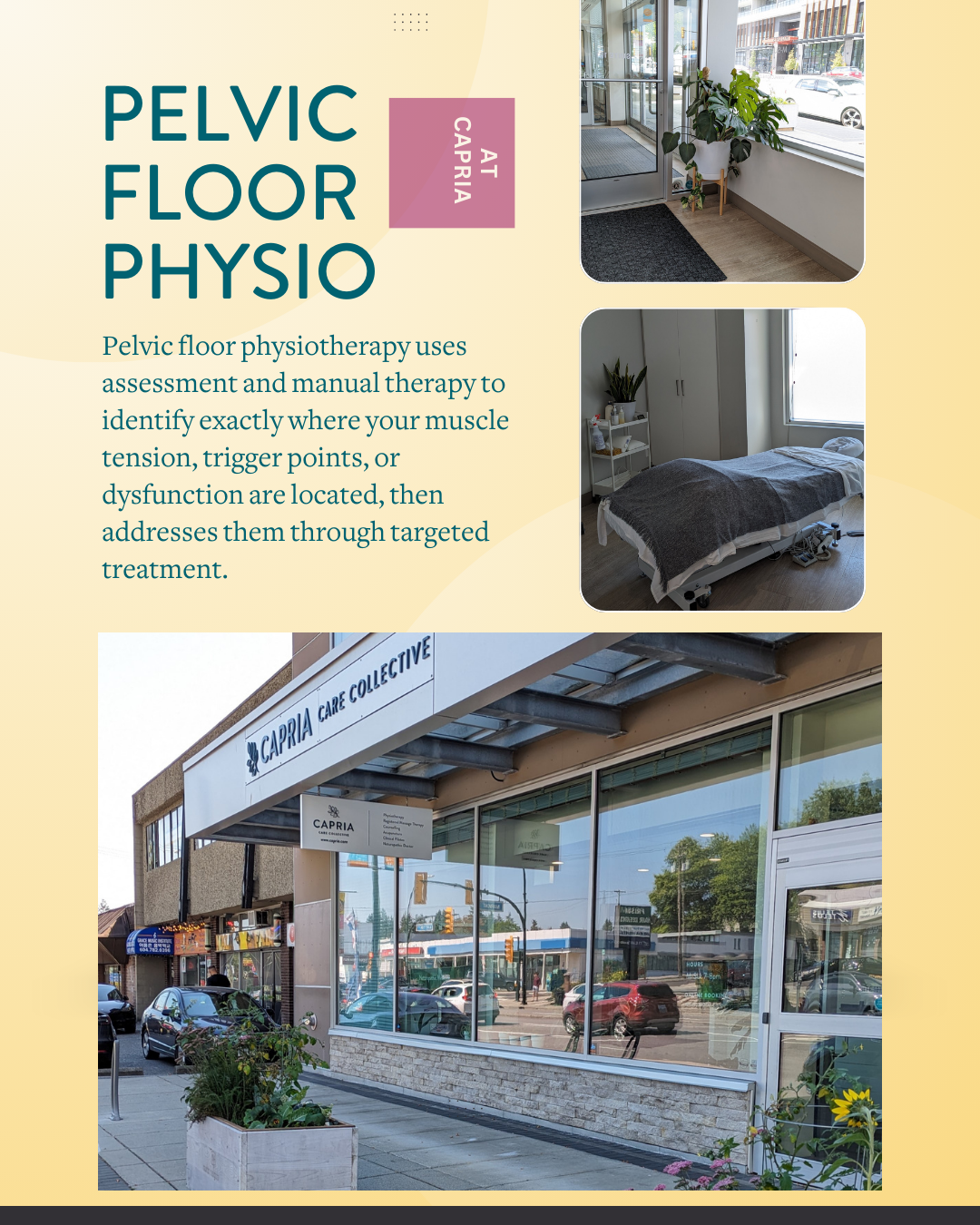
Pelvic floor physiotherapy uses assessment and manual therapy to identify exactly where your muscle tension, trigger points, or dysfunction are located, then addresses them through targeted treatment.
Assessment includes:
Detailed conversation about your pain (where, when, what makes it better/worse)
External assessment of your pelvic alignment, muscle tension, movement patterns
Internal assessment to identify specific areas of muscle tightness, trigger points, scar tissue, or asymmetries
Understanding your breathing patterns and how they affect pelvic floor tension
Treatment approaches:
Manual therapy: Your physiotherapist uses internal techniques to release tight muscles, address trigger points, and improve tissue mobility. This is done slowly, with constant communication, and you can stop at any time.
Muscle release and lengthening: You'll learn techniques to release pelvic floor tension at home - this is the opposite of kegels. For painful sex, strengthening is rarely the answer.
Desensitization work: Gradually rebuilding tolerance to touch and pressure in areas that have become hypersensitive.
Dilator therapy: If appropriate, progressive use of dilators can help retrain your pelvic floor muscles to tolerate penetration without the guarding response. Your physiotherapist will guide you through this at your own pace.
Pain science education: Understanding why your body is responding this way helps break the pain-tension cycle.
Breathing and body mechanics: How you breathe and hold tension in your body affects your pelvic floor. Learning to manage this can reduce pain.
Scar tissue work: If you have scarring from birth, surgery, or trauma, manual therapy can improve tissue mobility and reduce pain.
This is trauma-informed care. That means:
You're in control of every step
Nothing happens without your explicit consent
You can stop or pause at any point
Everything is explained before it happens
Your physiotherapist builds trust and safety first
Your comfort and autonomy are prioritized over treatment speed
What to Expect During Pelvic Floor Physiotherapy for Sexual Pain
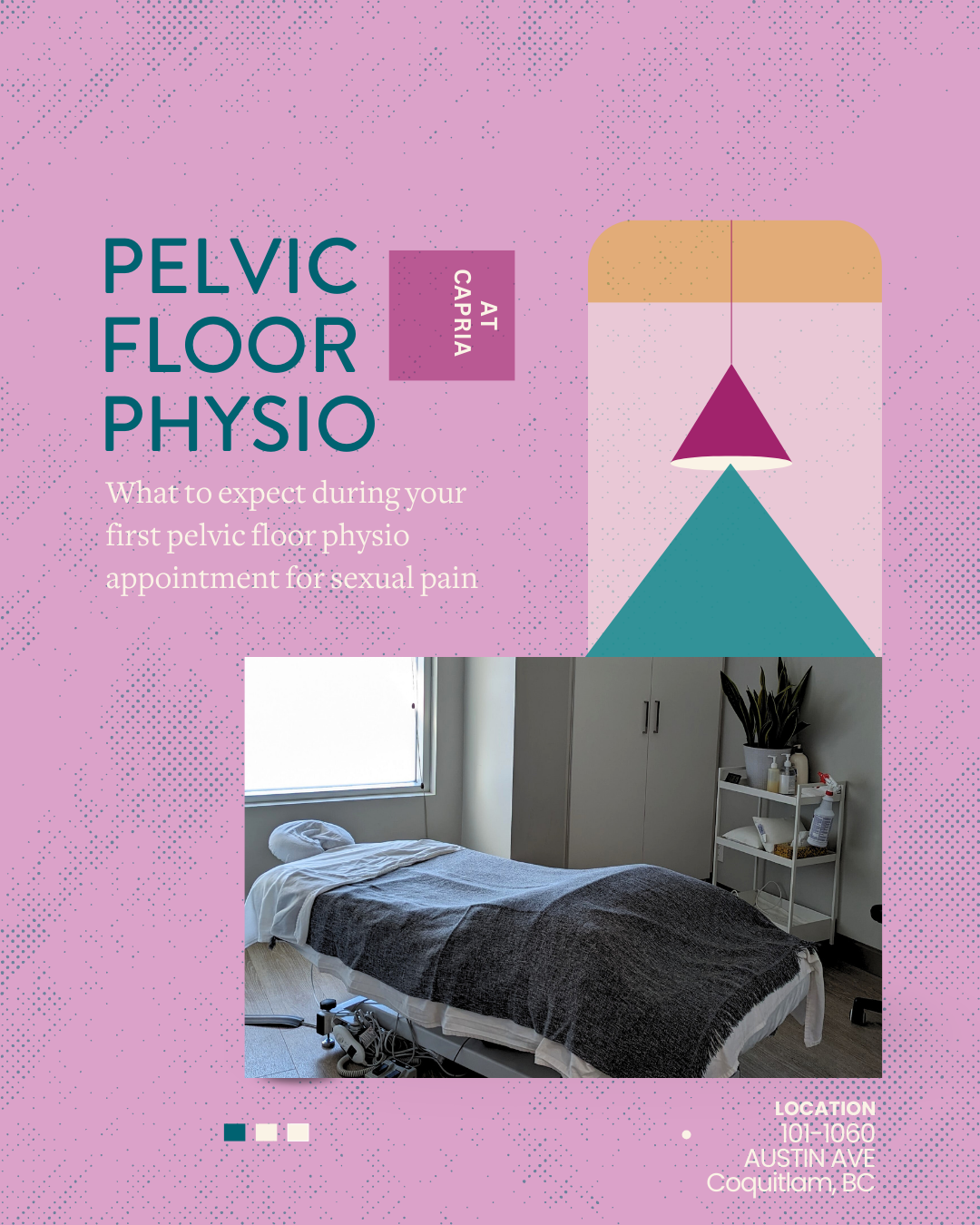
Your first appointment (60 minutes):
Much of your first session will be talking. In addition to multiple detailed intake forms, your physiotherapist needs to understand your full history - when the pain started, what it feels like, what makes it better or worse, your medical history, any trauma (physical or sexual), and your goals for treatment.
This conversation matters. It helps your physiotherapist understand not just what's happening with your body, but how to approach treatment in a way that feels safe for you.
After the conversation, there will be an external assessment - looking at your posture, how you move, how you breathe, checking for visible muscle tension or asymmetries.
Then, if you're comfortable, an internal assessment. This is not required on your first visit. Some people prefer to build trust first - getting to know their physiotherapist's treatment style and philosophy before doing internal work. Some people want to identify the source of the problem and get to fixing it right away. Both are completely fine.
About internal exams for sexual pain:
For painful sex specifically, an internal exam is really valuable because it allows your physiotherapist to identify exactly where the pain, tension, or trigger points are located. Without this information, treatment takes longer and is less targeted.
Your physiotherapist will explain exactly what they're going to do before they do it. They'll start with external touch first. They'll use a single finger, move very slowly, and check in constantly. You can ask them to slow down, pause, or stop at any point.
If you feel pain during the exam, tell your physiotherapist immediately. They'll stop and modify their approach. We use both the information you give us verbally and what your body shows us (including pain responses) to continue the assessment in a more tailored, specific way.
You're always in control of whether we continue. And here's what's important: research on chronic pelvic pain has shown that graded exposure - working WITH pain responses rather than pushing through them - is effective when combined with manual therapy. Once we identify where you're experiencing pain, we change our approach. The goal is gathering information so we can work WITH your body, not against it.
Follow-up sessions (typically 45 minutes):
These focus on manual therapy, teaching you self-release techniques, progressing dilator work if you're using them, and adjusting your home program based on how your body is responding.
When you book your initial assessment, we'll also schedule two follow-up appointments to ensure you can get the care you need without long waits between sessions. If you end up needing less treatment than expected, your physiotherapist will let you know - they might shorten sessions or suggest you cancel one of your follow-ups.
If you're on your period: Come anyway. Pelvic health physiotherapy means we're literally working with genitals, discharge, and bodily functions all day - periods don't faze us. We use absorbent underpads and provide wipes, and we have external treatment options available if needed.
How Long Does Treatment Take?
This varies widely, and honestly, it depends on several factors:
How long you've had symptoms
Whether there's scar tissue involved
If there's a trauma history (which may require slower, more gradual progression)
How severe the muscle tension is
How consistent you are with your home program
Some people see improvement in a few weeks. Others need several months of consistent work.
What you can generally expect:
Weeks 1-3: Assessment, beginning muscle release work, learning self-release techniques, starting to understand your body's patterns
Weeks 4-8: Progressive manual therapy, possibly beginning dilator work, noticing some reduction in pain or increased tolerance
Weeks 8-16: Continued progression, working toward your specific goals (pain-free intercourse, using tampons, whatever matters to you)
This isn't passive treatment - you'll have techniques to practice at home. Practicing between sessions typically speeds things up. But your physiotherapist knows that home practice for pelvic pain can be really hard - it might be physically painful, emotionally triggering, or you might not have the privacy or energy. Treatment will be adjusted based on what you can actually do, not what an ideal patient would do. You'll still make progress.
How Pelvic Floor Physiotherapy Helps Partners Navigate Sexual Pain

Let's be direct: painful sex affects relationships. It affects intimacy, connection, and sometimes how you feel about your own body.
But here's what's important: this treatment is about YOUR body and YOUR comfort. It's not about "fixing things for your partner." Your physiotherapist's job is to help you have a pain-free, functional pelvic floor - what you choose to do with that is up to you.
As for partners: they can be involved in your home care if YOU want them to be. A good, caring partner will want to understand what you're working on - that you're doing dilator work, that certain positions or activities might be uncomfortable right now, that progress takes time. They can create space for your home program - giving you privacy, not initiating sex during treatment phases, being patient with the timeline. They can learn positioning or techniques that can help during intimacy once you're ready. And for some people, having a partner involved in dilator work or exercises can actually make the process more intimate, playful, and less clinical - a way to rebuild connection without the pressure of sex.
Just knowing what's actually happening (that this is neuromuscular, not psychological; that it's treatable; that it's not about them) can also reduce their anxiety, which reduces pressure on you.
And sometimes you need to do this work for yourself, without anyone else's input or expectations. Both approaches are valid.
If your partner is putting pressure on you to "fix this" or making you feel broken, that's worth addressing, and you don’t deserve that. A counsellor with a special interest in sexual health can help - whether you go individually or together. Your body isn't broken. Your body learned a protective response, and that response can be unlearned.
When to Book Pelvic Floor Physiotherapy for Painful Sex
You should book if:
Sex is painful (before, during, or after)
You avoid sex or intimacy because of pain
You've never been able to have penetrative sex
You can't use tampons or menstrual cups
You've been diagnosed with vaginismus, vulvodynia, or dyspareunia
Pain started after childbirth, surgery, or menopause
Previous healthcare providers told you to "just relax" or that "everything looks fine"
You're experiencing pelvic pain that affects your ability to be intimate
When can you start:
If you're postpartum: Wait until 6 weeks after birth for pelvic floor-specific work, though you can book regular physiotherapy earlier for back pain or other concerns.
If you've had pelvic surgery: Check with your surgeon about timing, but typically 6-8 weeks post-op.
Any other time: You can book now. You don't need to wait, and you don't need to try to fix this yourself first.
You don't need a referral to see a physiotherapist in BC, though you might need one for insurance coverage.
What Our Physiotherapist Treats (And What She Refers Out)
Conditions we treat:
Vaginismus
Dyspareunia (painful intercourse)
Vulvodynia
Vestibulodynia
Pelvic pain affecting sexual function
Postpartum pain with intercourse
Post-menopausal sexual pain
Scar tissue causing pain
Conditions we refer out or co-manage:
Endometriosis (we can help manage pain, but you need medical diagnosis/management)
Active infections (need medical treatment first, then we can help with any residual dysfunction)
Gender affirmation surgery recovery
If you're not sure whether your concern fits, just ask - we're happy to point you in the right direction.
Frequently Asked Questions
-
A: No, but it is common - many people experience it - but common doesn't mean normal or something you have to accept. Pain during sex indicates that something isn't functioning optimally, and in many cases, it's treatable with pelvic floor physiotherapy.
-
A: No, you don't need a referral to see a physiotherapist in BC. However, if you're using extended health insurance, check your policy - some insurance companies require a referral for coverage.
-
A: Your physiotherapist will work within your comfort level. Some manual therapy might cause temporary discomfort as tight muscles are released, but it shouldn't be sharp or intolerable. You're in control and can ask to slow down or stop at any point.
-
A: It varies. Some people see significant improvement within 6-8 weeks. Others need several months, especially if there's trauma history or long-standing muscle tension. Consistency with your home program makes a big difference.
-
A: Yes, if you want to. Some people find it helpful for their partner to understand what's happening. Some people prefer to do this work privately. It's completely your choice.
-
A: This is incredibly frustrating and unfortunately common. While pain absolutely has emotional and psychological components (especially when there's trauma history), that doesn't mean it's not real or not physical. Pelvic floor muscle dysfunction is a real, measurable, treatable condition. Your pain is valid, regardless of what anyone else has told you.
-
A: Yes. While earlier treatment is ideal, it's never too late. Even if you've had painful sex for decades, pelvic floor physiotherapy can still help reduce pain and improve function.
-
A: A gynecologist is a medical doctor who diagnoses and treats reproductive health conditions. A pelvic floor physiotherapist works with the musculoskeletal system - the muscles, connective tissue, and nerves of the pelvic region. Often you need both: your gynecologist to rule out medical causes of pain, and your physiotherapist to address the muscle dysfunction.
Finding Pelvic Floor Physiotherapy for Painful Sex in Coquitlam
At Capria Care Collective, our physiotherapist takes a trauma-informed, body-neutral, shame-free approach to treating sexual pain and pelvic floor dysfunction. We see clients from Coquitlam, Port Coquitlam, Port Moody, Burke Mountain, and throughout the Tri-Cities area.
The goal is to help you have a pain-free, functional pelvic floor - so you can be intimate without pain, use the menstrual products you want to use, or simply feel comfortable in your own body. No judgment about your body, your history, how long you've been dealing with this, or what your goals are.
How to book: Pelvic floor physiotherapy appointments must be booked by phone or email (not through our online booking system) to allow for us to explain the process, proper information gathering and form completion.
Call us at 604-764-9839 or email to book your initial assessment.
Our clinic is conveniently located in Coquitlam, easily accessible from the Millennium and Expo lines and Highway 1.
You Deserve Pain-Free Intimacy
Painful sex is common, but it's not something you have to live with. Whether you've had this problem for months or years, whether it started after a specific event or has always been there, whether you're in a relationship or not - your comfort in your own body matters.
Your pelvic floor physiotherapist works with people experiencing painful sex every day. This conversation is familiar territory for them, and they want to help. Our reception team is also trained to handle these calls - they're professional, compassionate, and direct. There’s no awkwardness involved - like at all.
Painful sex is treatable with pelvic floor physiotherapy. Whether you've been dealing with this for months or years, whether it started after a specific event or has always been there - your comfort in your own body matters.
Ready to address painful sex? Book your appointment at Capria Care Collective in Coquitlam.
Call: 604-764-9839
References
1. Rosenbaum TY. (2005). Physiotherapy treatment of sexual pain disorders. Journal of Sex & Marital Therapy. 31(4):329-40.
https://doi.org/10.1080/00926230590950235
2. Lahaie MA, Amsel R, Khalifé S, Boyer S, Faaborg-Andersen M, Binik YM. (2015). Can fear, pain, and muscle tension discriminate vaginismus from dyspareunia/provoked vestibulodynia? Implications for the new DSM-5 diagnosis of genito-pelvic pain/penetration disorder. Archives of Sexual Behavior. 44(6):1537-50.
https://doi.org/10.1007/s10508-014-0430-z
3. Morin M, Dumoulin C, Bergeron S, Mayrand MH, Khalifé S, Waddell G, Dubois MF; PVD Study Group. (2021). Multimodal physical therapy versus topical lidocaine for provoked vestibulodynia: a multicenter, randomized trial. American Journal of Obstetrics and Gynecology. 224(2):189.e1-189.e12.
https://doi.org/10.1016/j.ajog.2020.08.038
4. Bergeron S, Reed BD, Wesselmann U, Bohm-Starke N. (2020). Vulvodynia. Nature Reviews Disease Primers. 6(1):36.
https://doi.org/10.1038/s41572-020-0164-2