
Leaking When You Cough, Sneeze, or Exercise? Here's What Pelvic Floor Physio Actually Does
You're three miles into your run when you feel it - that unmistakable leaking sensation. Or you sneeze during a meeting and immediately cross your legs. Or you're loading the barbell and realize you should have gone to the bathroom first.
Leaking urine is incredibly common - especially if you've had kids, but also if you're an athlete, going through menopause, or just dealing with a pelvic floor that isn't keeping up with what you're asking it to do. And while it's common, it's also fixable.
You don't have to plan your workouts around bathroom breaks. You don't have to wear pads "just in case." And you definitely don't have to give up running, lifting, or high-impact exercise because your bladder can't keep up.
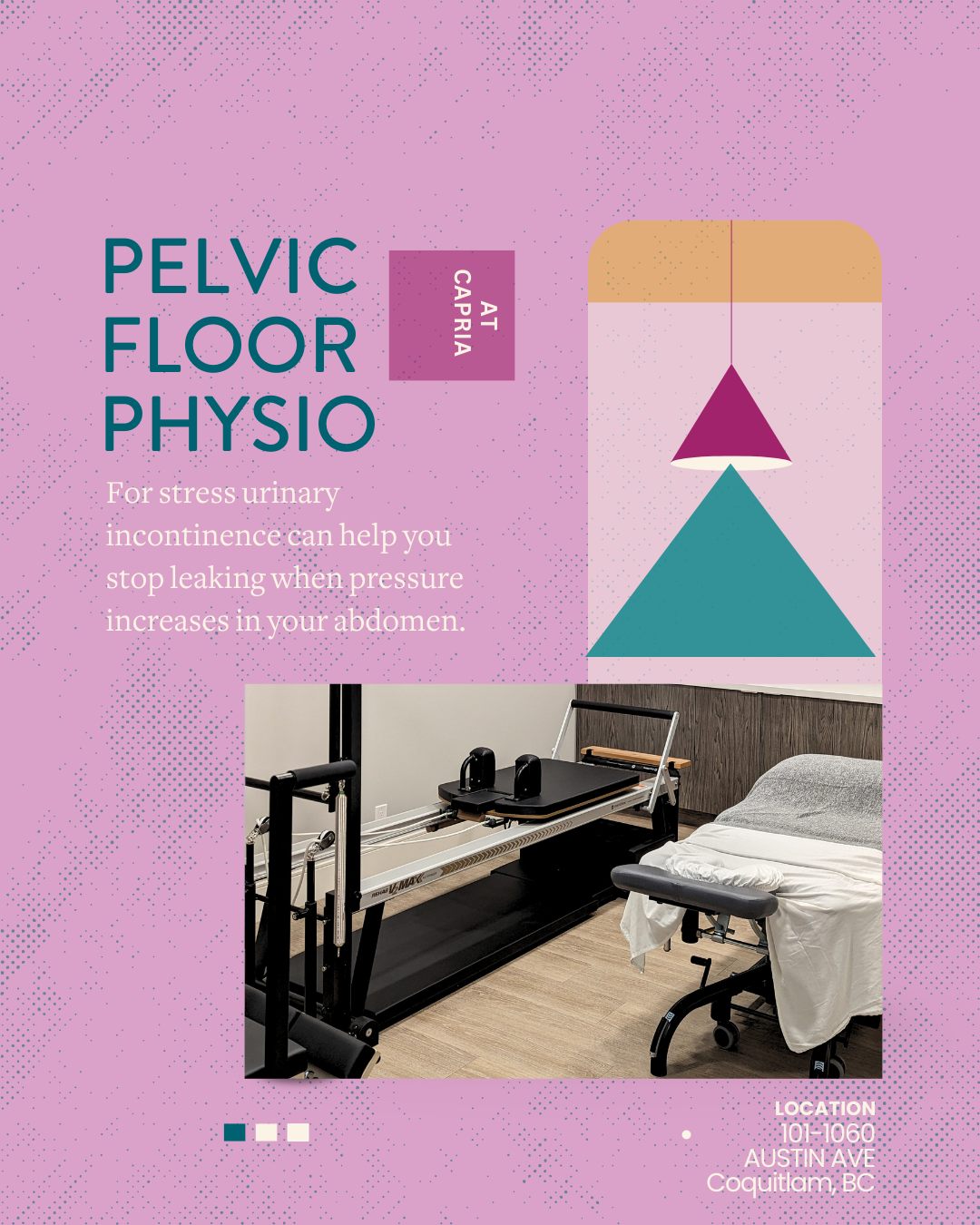
Pelvic floor physiotherapy for stress incontinence can help you stop leaking when pressure increases in your abdomen - whether that's during exercise, coughing, sneezing, or laughing. Whether you leak a few drops or need to change your clothes, whether it started after having kids or showed up later in life, there's effective treatment available in Coquitlam.
What Is Stress Urinary Incontinence?

Stress urinary incontinence happens when physical activity or movement increases pressure in your abdomen - things like coughing, sneezing, laughing, jumping, running, or lifting. Your pelvic floor muscles aren't able to respond quickly enough to that pressure, and urine leaks out.
This is different from urgency incontinence (when you get a sudden, strong urge to pee and can't make it to the bathroom in time) or overflow incontinence (when your bladder doesn't empty completely). Those are different issues with different treatment approaches.
Why does stress incontinence happen?
The short answer: your pelvic floor muscles, which support your bladder and help control urination, aren't functioning optimally. But the reasons why vary:
Pregnancy and childbirth: This is the most well-known cause. Growing and birthing a baby puts significant stress on your pelvic floor. Research shows that up to 1 in 3 people experience urinary incontinence after childbirth.
High-impact athletics: Runners, CrossFitters, weightlifters, gymnasts, and other athletes who do a lot of jumping, landing, or heavy lifting put repeated high pressure on their pelvic floor. Studies show that urinary incontinence occurs in about 20-50% of female athletes, with higher rates in high-impact sports
Aging and hormonal changes: Menopause and the drop in estrogen can affect the strength and elasticity of pelvic floor tissues. This doesn't mean leaking is inevitable as you age - it just means your pelvic floor might need some attention.
Chronic coughing or constipation: Repeatedly increasing pressure in your abdomen (from chronic coughing, straining during bowel movements, or heavy lifting) can weaken pelvic floor muscles over time. Research shows that 50% of women with chronic cough experience urinary incontinence.
Previous pelvic surgery: Procedures like hysterectomy can affect pelvic floor function.
Being overweight: Extra weight puts additional pressure on the pelvic floor.
Here's what's important: you don't have to have had kids to experience stress incontinence. And having kids doesn't mean you're destined to leak forever. This is a muscle coordination and function issue - and muscles can be trained.
How Pelvic Floor Physiotherapy Treats Stress Incontinence
Your pelvic floor physiotherapist will assess your pelvic floor function - not just strength, but coordination, timing, and endurance. They'll look at your whole body mechanics, your breathing patterns, how you move during the activities that cause leaking, and what's happening with your core and posture.
Here's something critical that most people don't know: it's not always about strengthening. Sometimes your pelvic floor is too tight. Sometimes one area is overworking while another isn't engaging at all. Sometimes your breathing pattern is creating too much downward pressure. Sometimes your core isn't coordinating properly with your pelvic floor.
This is why an internal pelvic exam is so valuable - it allows your physiotherapist to assess exactly what YOUR body needs. They can feel muscle tone, strength, asymmetries, and coordination. Then they can prescribe treatment tailored specifically to your pattern.
Treatment might include:
Pelvic floor muscle training - strengthening, endurance work, or learning to relax tight muscles
Core and breathing coordination
Strategies for managing intra-abdominal pressure during activities
Adjusting your exercise technique (how you're landing, lifting, or breathing during movement)
Progressive return to impact activities
Sometimes biofeedback to help you understand what your pelvic floor is doing
Research from the University of Alberta shows that pelvic floor muscle training in the first year postpartum lowers the risk of urinary incontinence by 37%. But this isn't just effective for postpartum people - studies show significant improvement in stress incontinence across all age groups and activity levels with proper pelvic floor physiotherapy.
Returning to Exercise After Stress Incontinence Treatment
One of the most common reasons people seek pelvic floor physiotherapy is because leaking is getting in the way of activities they want to do - whether that's running a 10k, playing with your kids at the park, doing yoga, going for walks, or just getting through a workout class without worrying about your bladder.
You don't have to be training for a marathon or lifting heavy at the gym for this to matter. If you're avoiding activities you enjoy because of leaking, that's reason enough to get help.
Here's the reality: You don't have to give up movement. But you might need to rebuild your foundation first.
For people returning to running: Running is high-impact - each foot strike creates 2-3 times your body weight in force that your pelvic floor has to manage. Your physiotherapist will assess whether your pelvic floor is ready for that impact, identify any gaps in strength or coordination, and create a progression plan. This might mean starting with walking, building up core and pelvic floor coordination, then gradually adding short running intervals before working back up to your previous distance or pace.
For people who lift weights: Heavy lifting requires good coordination between your breathing, your core, and your pelvic floor. If you're leaking when you lift, it usually means something in that coordination isn't working optimally - not that you need to stop lifting. Your physiotherapist can help you modify your breathing strategy, adjust your bracing technique, and progressively load so you can get back to the weights you want to lift without leaking.
For people who just want to move: Maybe you want to take a dance class, go hiking with friends, or play soccer with your kids. Maybe you avoid group fitness classes because you're worried about leaking during jumping jacks. Your physiotherapist can help you build the foundation you need to do these activities comfortably and confidently.
Realistic Timelines: How Long Does Treatment Take?

This is one of the most common questions, and the honest answer is: it depends.
Some people see improvement in a few weeks. Others need several months of consistent work. It depends on:
How long you've had symptoms
What's causing the incontinence (muscle weakness vs. coordination issues vs. tightness)
How consistent you are with your home program
What activities you're trying to get back to
What you can expect:
Weeks 1-2: Initial assessment, learning exercises, understanding what your body is doing
Weeks 3-6: Building foundation, starting to see some improvement in symptoms
Weeks 6-12: Progressive loading, returning to activities, refining technique
3-6 months: Most people see significant improvement by this point if they're consistent
The key word is consistent. This isn't a passive treatment - you'll have exercises to do at home, movement strategies to practice, and likely some adjustments to how you're approaching your workouts or daily activities.
To ensure you're getting good care, we recommend booking your first three sessions within one week of each other. If you end up needing less than that, it's easier to cancel than to find room in the schedule later.
When to Book Pelvic Floor Physiotherapy for Stress Incontinence in Coquitlam
You should book if:
You're leaking during exercise, coughing, sneezing, or laughing
You're avoiding activities you love because of leaking
You're planning your day around bathroom access
You're wearing pads "just in case"
You want to get back to running, jumping, or lifting but leaking is holding you back
When can you start?
If you're postpartum: You can start foundational work (breathing, gentle core exercises) in the first few weeks after birth. For comprehensive assessment including internal work, we recommend waiting until 6 weeks postpartum.
If you're not postpartum: You can book anytime. You don't need to wait or try to fix it yourself first.
You don't need a referral to see a physiotherapist in BC, though you might need one for insurance coverage.
What to Expect at Your Pelvic Floor Physiotherapy Appointment

Your first appointment (60 minutes) includes a detailed conversation about your symptoms, what activities cause leaking, your goals, and your history. Your physiotherapist will ask about your bladder habits, bowel function, any pain, and your activity level.
They'll assess your posture, movement patterns, breathing, and core function. If it's appropriate and you're comfortable, they may offer an internal vaginal exam to assess your pelvic floor muscles.
About internal exams: Are they necessary? Honestly, kind of yes. Without an internal assessment, treatment often takes significantly longer because we're working with less information. Internal exams allow us to properly assess muscle tone, strength, coordination, and identify the specific issue - which means fewer sessions and more cost-effective treatment.
That said - you're always in control. Internal exams require your permission and you can decline, ask questions first, or request it at a future appointment once you feel more comfortable.
If you're on your period: Come anyway. We're pelvic health specialists - bodies and bodily functions are literally what we do. We use absorbent underpads and provide wipes, and we have external treatment options available if needed.
Follow-up sessions are typically 45 minutes and focused on your personalized treatment plan. When you book your initial assessment, we'll also schedule two follow-up appointments to ensure you can get the care you need without long waits between sessions. If you end up needing less treatment than expected, your physiotherapist will let you know - they might shorten sessions or suggest you cancel one of your follow-ups.
What Our Physiotherapist Treats (And What She Doesn't)
Conditions we treat:
Stress urinary incontinence
Urgency incontinence and overactive bladder
Mixed incontinence (combination of stress and urgency)
Fecal incontinence
Prolapse
Painful sex
Tailbone pain
Diastasis recti
Return to fitness after childbirth
Conditions we refer out:
Hysterectomy recovery
Endometriosis
Gender affirmation surgery
Pessary fitting
Prostatectomy recovery
If you're not sure if your concern fits, just ask - we're happy to point you in the right direction.
Frequently Asked Questions About Pelvic Floor Physiotherapy for Incontinence
-
A: No. While pregnancy and childbirth are common causes of pelvic floor dysfunction, stress incontinence can happen to anyone - athletes, people going through menopause, people with chronic coughs, or anyone experiencing pelvic floor muscle dysfunction.
-
A: You might not need to do kegels at all. If your pelvic floor is too tight, kegels would actually make things worse - your treatment would focus on relaxation and lengthening instead. The goal is to restore function so your pelvic floor works automatically during daily activities and exercise. Once you've built that foundation, you might just need periodic maintenance rather than daily exercises - or you might not need ongoing exercises at all.
-
A: It depends. Your physiotherapist will assess what's safe for you to continue and what you might need to modify temporarily while you rebuild your foundation. The goal is to get you back to full activity - sometimes that means scaling back briefly to build up properly.
-
A: Most people notice some improvement within 3-6 weeks if they're consistent with their home program. Significant improvement typically happens within 3-6 months.
-
A: It's common, but it's not normal. Even small amounts of leaking indicate that your pelvic floor isn't coordinating optimally with the demands you're placing on it. And it's treatable.
-
A: Not at all. Whether you've been dealing with this for 6 months or 16 years, pelvic floor physiotherapy can help improve symptoms and function.
Pelvic Floor Physiotherapy for Stress Incontinence in Coquitlam
At Capria Care Collective, our physiotherapist takes an evidence-based, body-neutral approach to treating stress urinary incontinence and other pelvic floor concerns. We see clients from Coquitlam, Port Coquitlam, Port Moody, Burke Mountain, and throughout the Tri-Cities area.
The goal is to help you get back to the activities you love - whether that's running, lifting, playing with your kids, or just getting through your day without planning around bathrooms. No judgment about your body, how long you've been dealing with symptoms, or what activities matter to you.
Ready to Stop Planning Your Life Around Your Bladder?
Leaking when you cough, sneeze, or exercise is common - but it's not something you have to accept. Whether you've had kids or not, whether you're 25 or 65, whether you leak a little or a lot - pelvic floor physiotherapy can help.
Book your appointment at Capria Care Collective in Coquitlam. Call us at 604-764-9839
References:
Thom DH, Rortveit G. (2010). Prevalence of postpartum urinary incontinence: a systematic review. Acta Obstetricia et Gynecologica Scandinavica.
Davenport MH, et al. (2025). Impact of postpartum exercise on pelvic floor disorders and diastasis recti abdominis: a systematic review and meta-analysis. British Journal of Sports Medicine.
Dumoulin C, et al. (2018). Pelvic floor muscle training versus no treatment for urinary incontinence in women. Cochrane Database Syst Rev.
Bø K, Nygaard IE. (2020). Is physical activity good or bad for the female pelvic floor? Sports Medicine.