Pelvic Floor Physiotherapy During Pregnancy: Coquitlam Prenatal Care Guide

You've probably heard that you should "do your kegels" during pregnancy. And while pelvic floor exercises can be helpful, pelvic floor physiotherapy during pregnancy is so much more nuanced than that. You deserve care that actually addresses what YOUR body needs, not generic advice from the internet.
If you're pregnant and dealing with pelvic pain, worried about delivery, or wondering if pelvic floor physiotherapy might help you feel better, this is your guide to what it actually involves.
What Is Pelvic Floor Physiotherapy for Pregnancy?
Pelvic floor physiotherapy during pregnancy isn't about fixing something that's broken. Your body isn't broken - it's literally growing a whole human, which is both amazing and mechanically complicated.
A pelvic floor physiotherapist looks at how your whole body is adapting to pregnancy - your posture, movement patterns, any pain you're experiencing, and how your pelvic floor muscles are functioning. They assess the muscles, ligaments, and joints in your pelvis, but also how your hips, back, and breathing patterns are all working together.
The goal is to help you move comfortably through pregnancy, prepare your body for delivery (whatever that looks like for you), and set you up for a better recovery afterward.
Why "Just Do Kegels" Doesn't Work for Everyone
Your pelvic floor physiotherapist will actually assess what YOUR pelvic floor needs. Sometimes that's strengthening. Sometimes it's learning to lengthen and relax these muscles (which is crucial for delivery). Sometimes it's addressing asymmetries or coordination issues.
Not everyone needs to strengthen their pelvic floor during pregnancy. Some people need to learn how to relax it. Some need both. And some people's pelvic floor is doing just fine - they might need to focus on something else entirely, like their hip stability or breathing mechanics.
The right treatment plan is the one designed for your specific body and your specific goals - not a one-size-fits-all prescription.
Pelvic Girdle Pain in Pregnancy: How Physiotherapy Helps
Pelvic girdle pain affects up to 1 in 5 pregnant people, and it's one of the most common reasons people seek pelvic floor physiotherapy during pregnancy. You might experience:
Pain in your pubic bone, lower back, hips, or groin
Pain that gets worse with walking, stairs, or rolling over in bed
Difficulty getting in and out of the car
Pain when getting dressed or moving through everyday activities
This happens because pregnancy hormones relax your ligaments to prepare for birth, which can lead to too much movement in your pelvic joints. Combined with your changing center of gravity and posture, your pelvis is working overtime to stay stable.
Pelvic floor physiotherapy helps by:
Assessing which specific joints and muscles are involved
Using manual therapy to reduce pain and improve mobility
Teaching you exercises to strengthen supporting muscles
Showing you how to move through your day with less pain
Recommending support belts or taping when helpful
Research shows that specific exercises and manual therapy can significantly reduce pelvic pain during pregnancy. You don't have to just accept it as "part of being pregnant."
Prenatal Pelvic Floor Therapy: Preparing Your Body for Delivery
This is where pelvic floor physiotherapy really shines - giving you information and options so you can make informed decisions about your birth.
Labor positions and movement: Not everyone needs to deliver lying on their back (though sometimes it's medically necessary). Your physiotherapist can help you practice different positions and movements that might help labor progress and reduce pelvic floor trauma. Having options and knowing what positions feel good for your body ahead of time can be empowering.
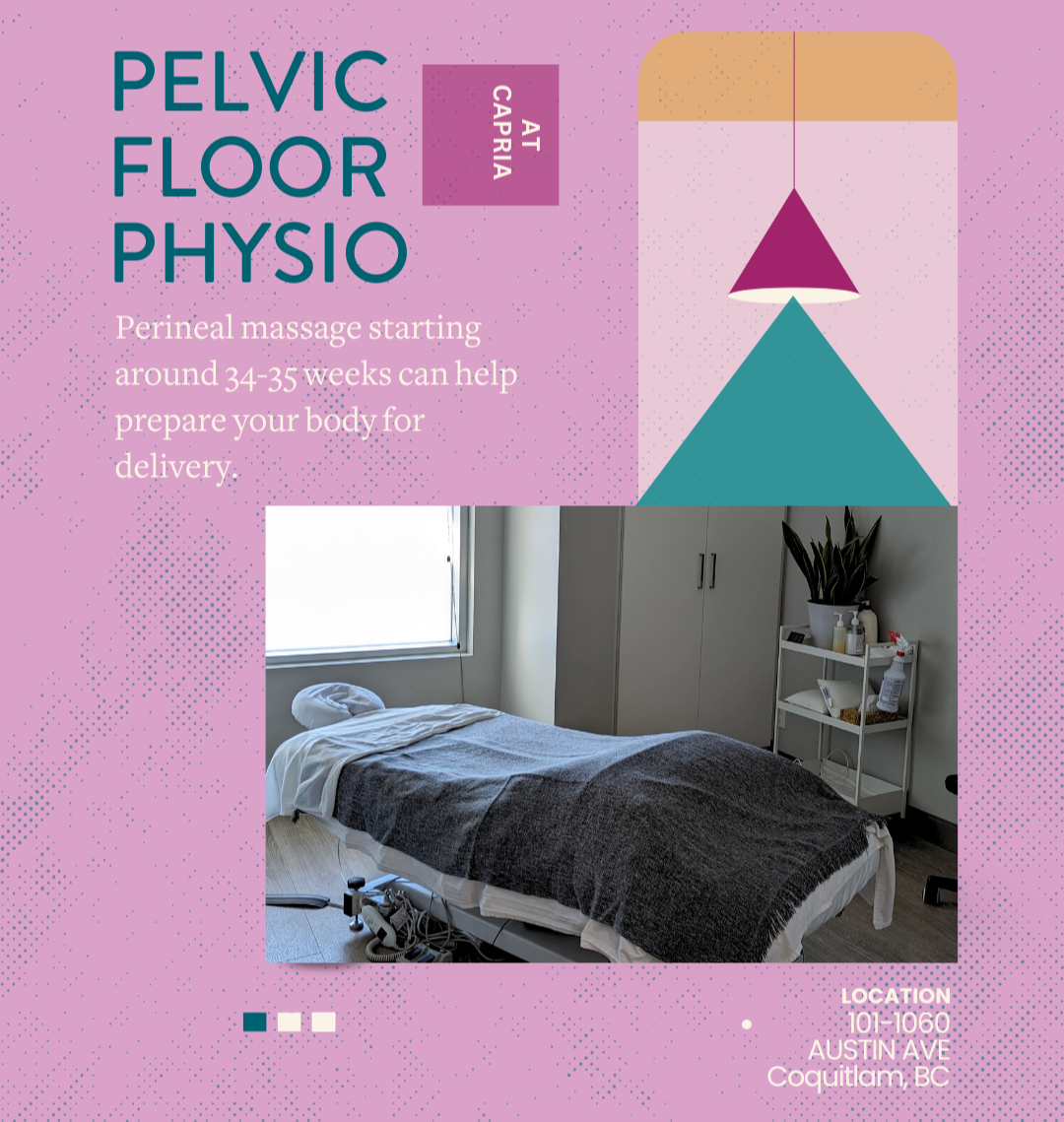
Perineal massage: Starting around 34-35 weeks, this technique can reduce your risk of tearing and the need for episiotomy. Your physiotherapist will teach you (or your partner) exactly how to do it. Yes, it might feel awkward at first, but knowing what to expect and having practiced can make a real difference.
Breathing and pushing mechanics: How you breathe and push during delivery matters. Your physiotherapist can help you understand your options and practice techniques that work with your body.
Pelvic floor relaxation: Learning to consciously relax your pelvic floor is a skill. If you're planning a vaginal delivery, your pelvic floor needs to stretch and lengthen to allow your baby through. Practicing this before labor can help you feel more prepared.
The goal is to give you knowledge and tools so you feel more confident going into delivery, whatever your birth plan looks like.
When to Book Pelvic Floor Physiotherapy
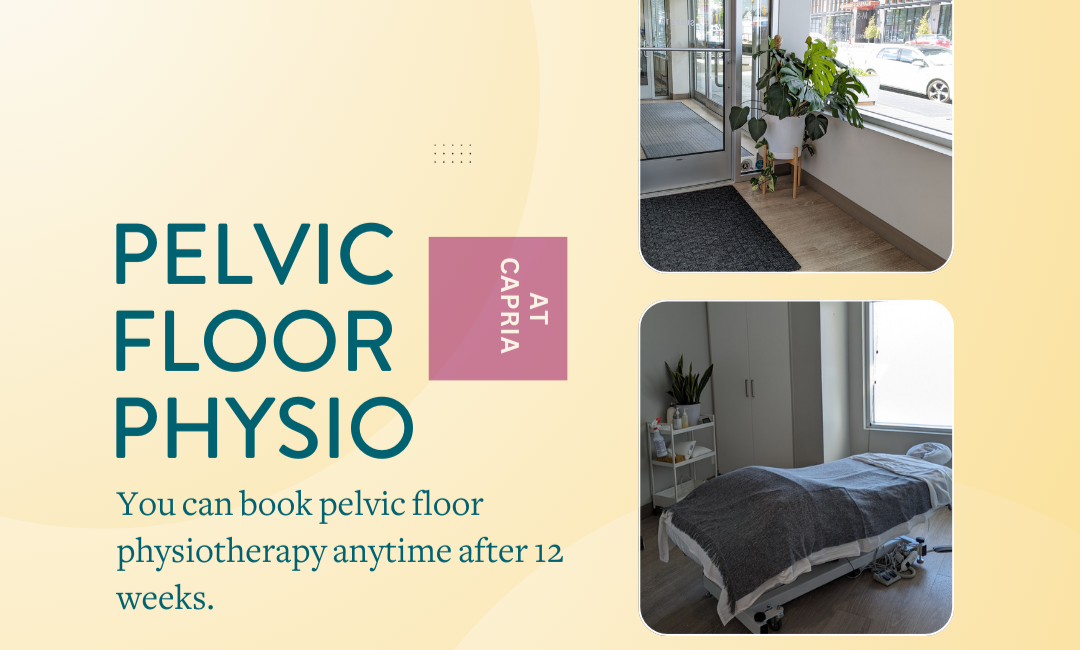
During pregnancy: You can book anytime after 12 weeks. Our physiotherapist doesn't do internal pelvic floor work in the first trimester, but you can still book a regular physiotherapy appointment if you're experiencing pain or other concerns early on.
Good times to consider booking:
Second trimester if you're starting to notice changes or developing pelvic pain
Third trimester for delivery prep and vaginal opening preparation
Anytime you're experiencing pelvic pain, urinary leakage, or feeling like something's "off"
After delivery: You can book anytime after 6 weeks postpartum. If you had a c-section, we recommend waiting until 6 weeks for pelvic floor-specific work, though you can book regular physiotherapy before that for other concerns like back pain from feeding and carrying.
You don't need a referral to see a physiotherapist in BC, though you might need one for insurance coverage.
What Our Physiotherapist Treats (And What She Doesn't)
It's helpful to know what to expect, so here's what our physiotherapist at Capria is trained in:
Conditions we treat:
Prolapse
Incontinence (both urinary and fecal)
Overactive bladder
Tailbone pain
Vulvodynia and vestibulodynia
Vaginismus and painful sex
Vaginal opening preparation for delivery
C-section recovery and scar management (after 6 weeks)
Diastasis recti
Back pain from carrying and feeding (book as regular physio)
Return to fitness after childbirth (book as regular physio)
Conditions we refer out:
Hysterectomy recovery
Endometriosis
Gender affirmation surgery
Pessary fitting
Prostatectomy recovery
If you're not sure if your concern fits, just ask - we're happy to point you in the right direction.
What to Expect at Your Appointment
Your first visit (60 minutes) includes a thorough conversation about your history, symptoms, and goals. We'll talk about your bladder and bowel habits, any pelvic pain, your pregnancy and birth history, and what you're hoping to address.
Your physiotherapist will assess your posture, movement, and how different muscle groups are working. If it's appropriate and you're comfortable, they may offer an internal vaginal exam to assess your pelvic floor function. This is completely optional and requires your consent.
About internal exams: Are they necessary? Honestly, kind of yes. Pelvic floor conditions can be complex, and without an internal assessment, treatment often takes significantly longer because we're working with less information. Internal exams allow us to properly assess muscle tone, strength, coordination, and identify the specific issue - which means fewer sessions and more cost-effective treatment for you.
That said - you're always in control. You can decline internal work, ask questions first, or request it at a future appointment once you feel more comfortable.
If you're on your period: Please don't reschedule. We work with bodies all day, and nothing about yours will surprise us. We use absorbent underpads and provide wipes, and we have external treatment options available if needed.
Follow-up sessions are typically 45 minutes and focused on your personalized treatment plan. To ensure you're getting good care, we always advise booking your first three sessions within one week of each other. If you end up needing less than that, it's easier to cancel than to find room in the schedule later.
Pelvic Floor Physiotherapy in Coquitlam: Book Your Prenatal Appointment
At Capria Care Collective, our physiotherapist takes an evidence-based, body-neutral approach to prenatal and postpartum care. We see clients from Coquitlam, Port Coquitlam, Port Moody, and Burke Mountain.
The goal is to give you comprehensive care that addresses what you actually need, with education and options so you feel informed and empowered. No judgment about your body, your birth plan, or where you're starting from.
Ready to book? You can schedule directly through our website or give us a call. Come as you are, take what you need.
FAQ’s
-
A: Pelvic Floor Physiotherapy can address a range of conditions, including but not limited to:
Pre and postnatal care
c-section
vaginal opening prep
diastasis recti
scar management
Pelvic Floor Conditions
Prolapse
Incontinence - both kinds of incontinence, urinary and fecal
Overactive bladder
Coccydynia/Tailbone pain
Vulvodynia
Vestibulodynia
Vaginismus
-
A: The assessment involves a thorough examination of the pelvic floor muscles, posture, and movement patterns. Treatment may include pelvic floor exercises, manual therapy, biofeedback, and education on lifestyle modifications. Tailored exercises and strategies are prescribed based on individual needs.
-
A: The initial assessment will be tailored to your needs with a comprehensive history taking of your bladder and bowel habits/function, sexual health, obstetric history, and pelvic floor/core awareness.
If you are comfortable and we deem it suitable an internal vaginal and/or rectal exam may be performed to help assess the functioning of your pelvic floor.
1 hour assessment - physiotherapist will use last 5 minutes for clean up and questions
-
A: The duration of a session can vary but typically lasts 45 minutes. The exact time depends on the complexity of the condition and the individualized treatment plan.
-
A: We use extra absorption “Blue Under pads” & provide intimate wipes so you won’t need to worry about blood or fluid getting on your clothes or sheets. External pelvic floor treatment options are available at that time too.
-
A: In many cases, a referral from a healthcare provider is not required for Pelvic Floor Physiotherapy. However, some insurance plans may require a referral for coverage. It's advisable to check with both the physiotherapist and the insurance provider
-
A: No, but also kinda yes. Pelvic floor conditions can be complicated and take a long time to treat.
If there is no internal work, the treatment plan will take considerably longer because we cannot do a thorough internal assessment.
We prefer to do the internal work because it’s more cost effective for you as a patient. It’s faster, there are less sessions involved because we can assess and treat without making guesses or speculations as to what the problem and the solution might be.
References:
Bø K, et al. (2020). Pelvic floor muscle training for prevention and treatment of urinary and fecal incontinence in antenatal and postnatal women. Cochrane Database Syst Rev.
Vleeming A, et al. (2008). European guidelines for the diagnosis and treatment of pelvic girdle pain. Eur Spine J.
Beckmann MM, Stock OM. (2013). Antenatal perineal massage for reducing perineal trauma. Cochrane Database Syst Rev.
Wondering If Pelvic Floor Physiotherapy Is Right for You?
If you're pregnant and experiencing pelvic pain, worried about delivery, or just curious about how your pelvic floor is doing - that's reason enough to book.
Our physiotherapist in Coquitlam specializes in prenatal and postpartum pelvic health. No judgment, no BS, just evidence-based care that's tailored to your body.
or call 604-764-9839 with any questions.